Ginger
Zingiber officinale
A reed-like tropical herb grown for its knobbly, fiery rhizome — the oil is distilled from the root.
- Family
- Ginger family (Zingiberaceae)
- Oil from
- Rhizome
What it looks like
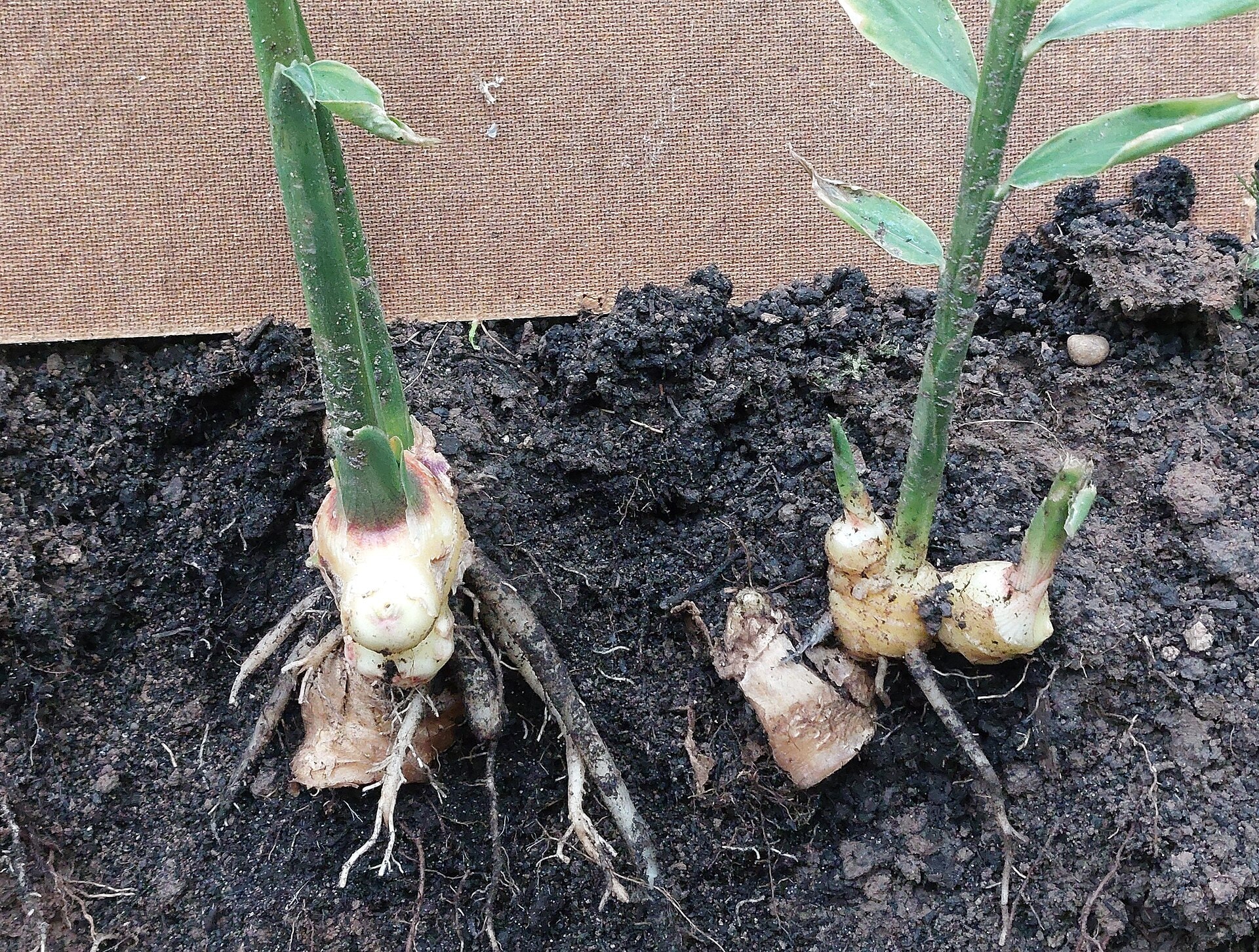
A perennial about 1 m tall. What looks like a stem is a bundle of tightly wrapped leaf sheaths, with long, narrow, lance-shaped leaves.
In cultivation ginger rarely flowers; when it does, cone-shaped spikes carry yellow-green flowers with a purple lip. Underground lies the familiar rhizome: branched like a hand, with thin beige skin and pale yellow flesh.
Where it grows
Ginger was domesticated in South and South-East Asia so long ago that it is no longer known in the wild. It needs warmth, humidity and loose soil; the main producers are India, China, Nigeria and Indonesia.
What the oil is made of
Main constituents of the essential oil and their molecular formulas. Shares vary with harvest, origin and distillation.
- C15H24Zingiberene
- C15H22ar-Curcumene
How it may help
In Asia ginger has been a spice and a household remedy for thousands of years; in Europe it was one of the most valued spices of the Middle Ages.
EMA recognises powdered ginger root — not the essential oil — for the prevention of nausea and vomiting in motion sickness (well-established use), and traditionally for mild digestive complaints and temporary loss of appetite.
This refers to registered herbal medicines with set doses, not to cosmetic or food-grade oils.
Studies of ginger root suggest it may help with nausea and vomiting in pregnancy, while most motion-sickness studies did not find a benefit (NCCIH). These studies used the root or its extracts, not the essential oil. A 2025 review summarises the meta-analyses.
For information only. This is not medical advice and does not replace a doctor. Essential oils are not medicines and are not intended to diagnose, treat, cure or prevent any disease.
How to use
- Kitchen
The EU label allows this oil as a food flavouring: no more than 1 drop a day, always mixed into food or drink. Stir it into a stir-fry sauce, a carrot soup or gingerbread dough.
- Kitchen
The plant itself: a few slices of fresh root in hot water with lemon and honey.
Safety
From the EU label: use only diluted, no more than one drop a day. Keep out of reach of children. If you are pregnant or under medical care, ask your doctor. Keep away from the eyes and mucous membranes.
Ginger taken by mouth can cause stomach discomfort and heartburn (NCCIH). During pregnancy, talk to your doctor first.
Sources
In the shop
Herbarium
All plants