Melissa
Melissa officinalis
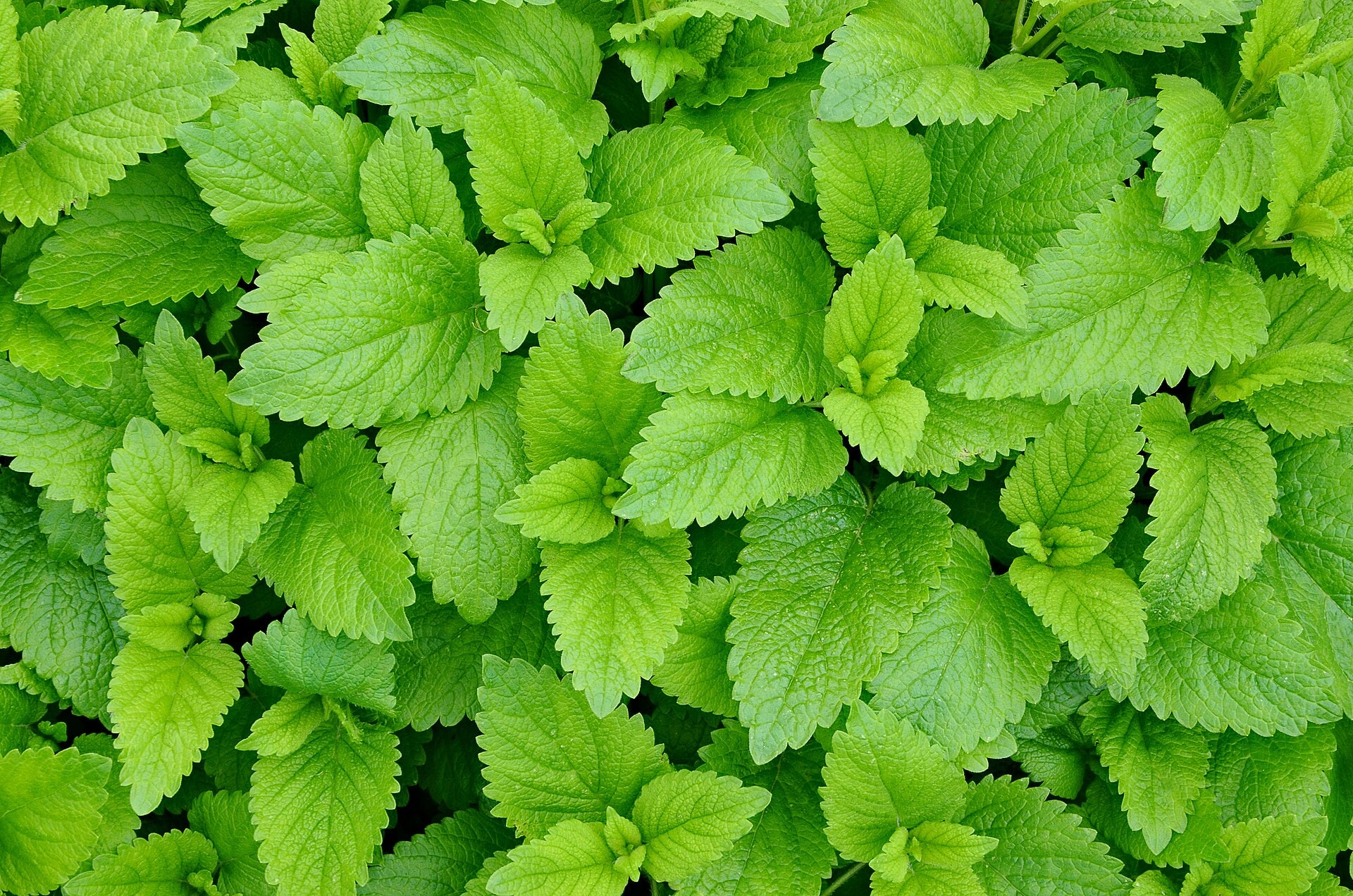
Lemon balm: a soft green herb with a gentle lemon scent and a name that means “honeybee”.
- Family
- Mint family (Lamiaceae)
- Oil from
- Aerial parts
What it looks like
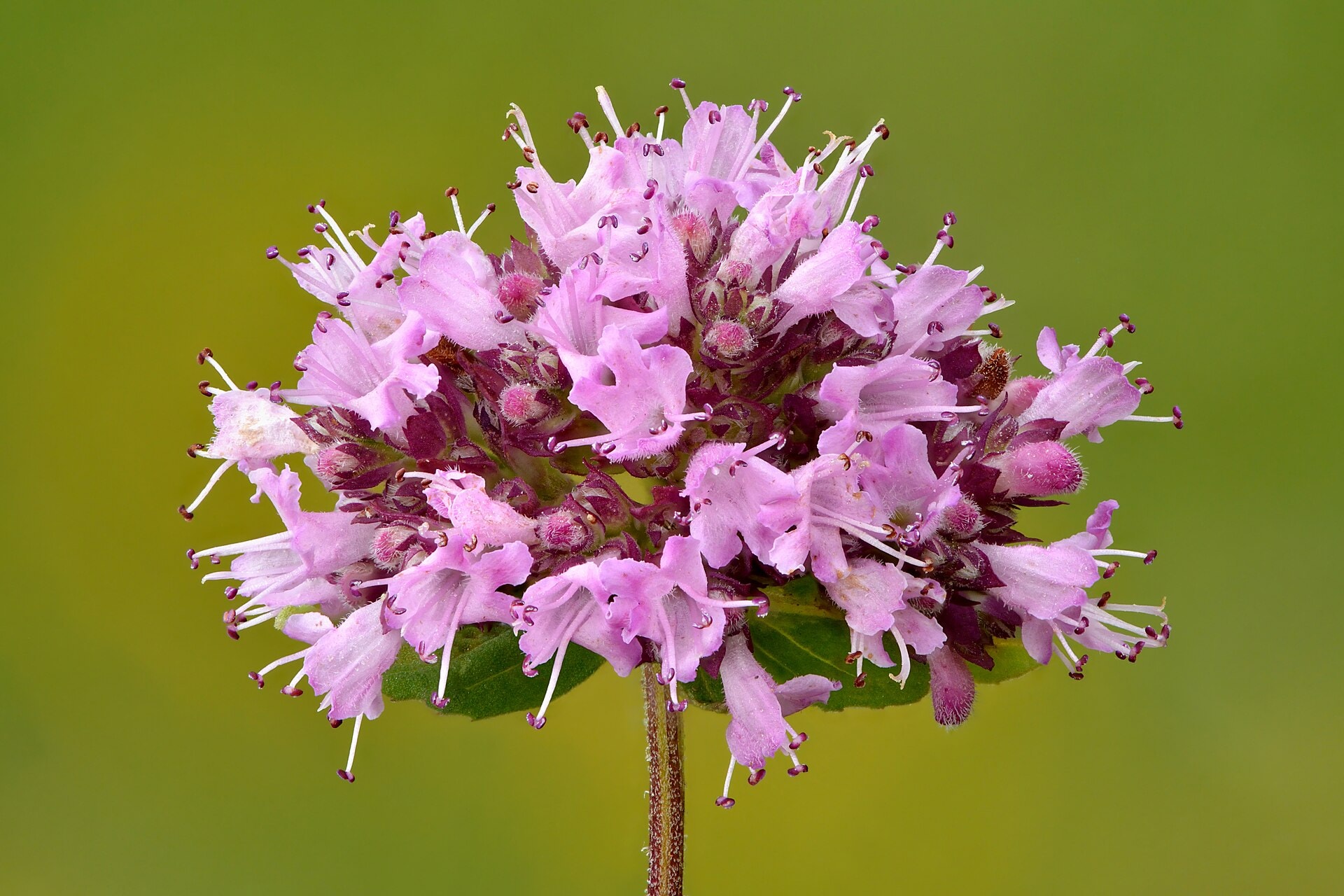
A bushy perennial 30–90 cm tall with square stems. The leaves are opposite, heart- to egg-shaped, toothed, bright green and slightly wrinkled; rub one and it smells of lemon.
In summer small white or pale pink flowers appear in the leaf axils, and the plant hums with bees.
Where it grows
Melissa is native to southern Europe, the Mediterranean and western Asia, and has gone wild in many gardens and hedgerows. It likes partial shade and moist soil.
What the oil is made of
Main constituents of the essential oil and their molecular formulas. Shares vary with harvest, origin and distillation.
- C10H16OGeranial (citral A)
- C10H16ONeral (citral B)
- C15H24β-Caryophyllene
How it may help
Lemon balm tea has been a calming evening drink in Europe since the Middle Ages, and melissa water, distilled by Carmelite monks in Paris from the 17th century, became famous across France.
EMA recognises melissa leaf — as tea or oral preparations, not the essential oil — as a traditional herbal medicine for mild symptoms of stress, to aid sleep and for mild digestive complaints.
A 2021 meta-analysis pooled clinical trials of lemon balm — mostly leaf extracts — on anxiety and low mood. EMA notes that the studies it reviewed had design shortcomings, so its conclusions rest on traditional use. Research on the essential oil itself is scarce.
For information only. This is not medical advice and does not replace a doctor. Essential oils are not medicines and are not intended to diagnose, treat, cure or prevent any disease.
How to use
- On skin
Melissa is intense: mix 1 drop with two teaspoons (10 ml) of carrier oil and massage into the skin. Try it on a small patch of skin first.
- Kitchen
The plant itself: fresh leaves make a gentle lemony tea, hot or iced.
Safety
From the EU label: possible skin sensitivity. Keep out of reach of children. If you are pregnant or under medical treatment, ask your doctor first. Avoid the eyes, inner ears and sensitive areas.
Citral, the lemony part of the oil, can sensitise the skin — always use it well diluted.
Store the bottle tightly closed, away from heat and light: oxidised oil irritates the skin more easily.
Sources
In the shop
Herbarium
All plants