Clove
Syzygium aromaticum
An evergreen tree of the Spice Islands; its unopened flower buds, dried, become the cloves in your kitchen.
- Family
- Myrtle family (Myrtaceae)
- Oil from
- Flower buds
What it looks like
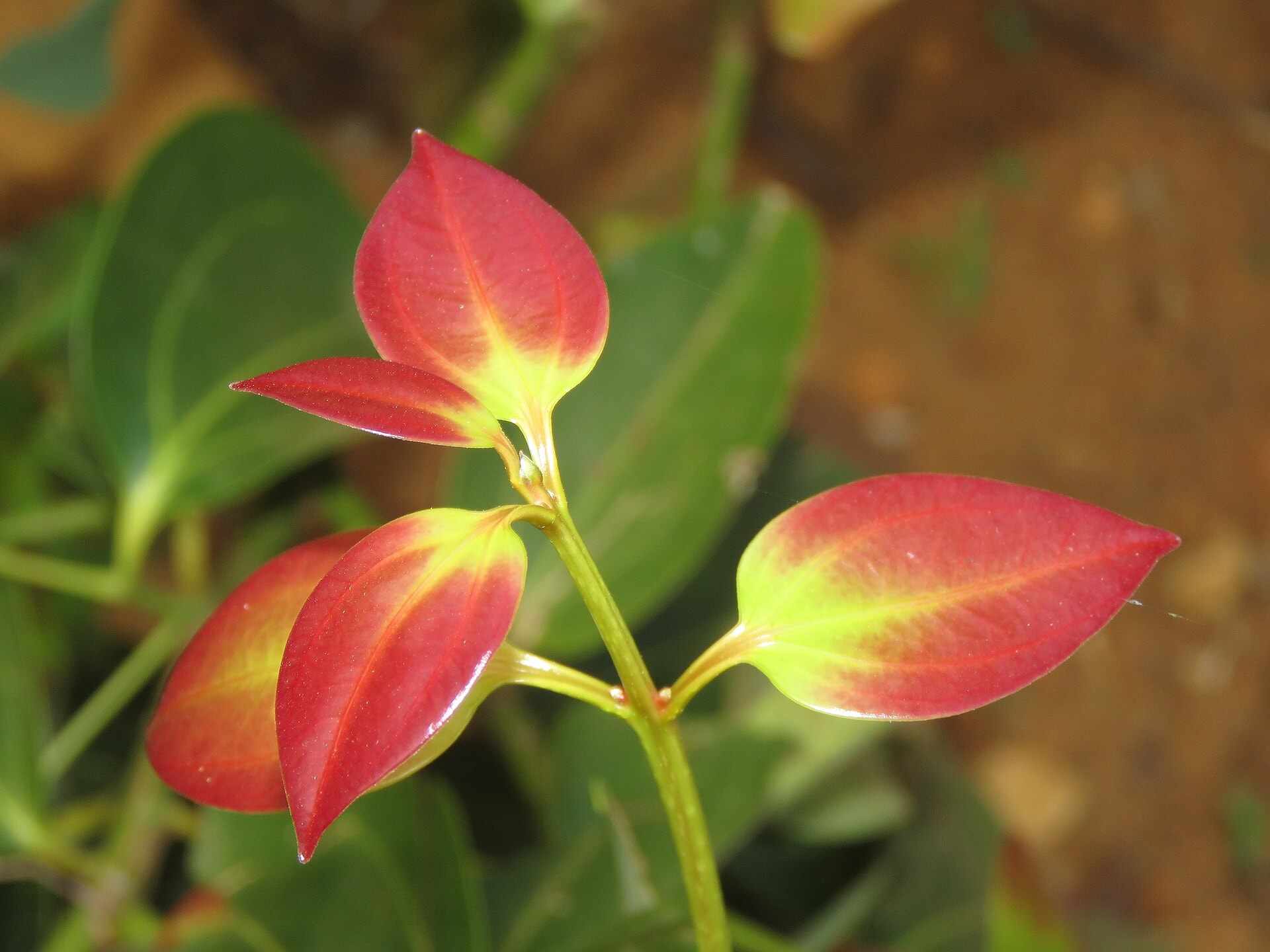
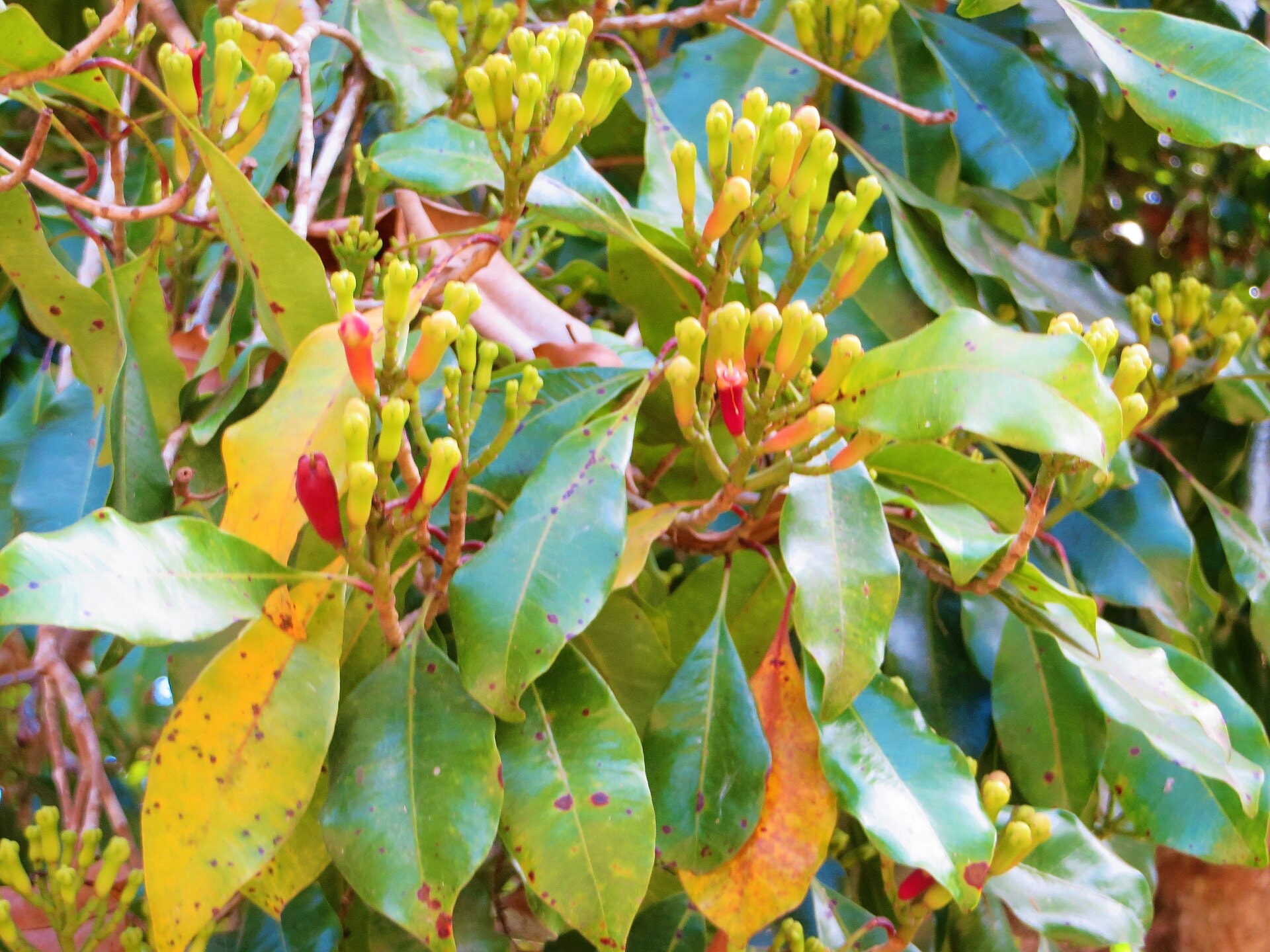
A tree 8–12 m tall with a conical crown and glossy, leathery leaves. The flower buds grow in clusters at the tips of the branches and change colour from pale green to crimson.
They are picked by hand just before they open and dried in the sun until they turn dark brown — each one shaped like a little nail with a round head.
Where it grows
Cloves come from the Maluku Islands of Indonesia, the legendary Spice Islands. Today they are also grown in Zanzibar, Madagascar and Sri Lanka, in hot, humid climates near the sea.
What the oil is made of
Main constituents of the essential oil and their molecular formulas. Shares vary with harvest, origin and distillation.
- C10H12O2Eugenol75–88% · typical share
- C12H14O3Eugenyl acetate4–15% · typical share
- C15H24β-Caryophyllene5–14% · typical share
How it may help
Cloves were among the most expensive spices of the medieval world. Eugenol, the main compound of clove oil, is still used by dentists in temporary fillings.
EMA recognises clove oil as a traditional herbal medicine for minor inflammation in the mouth and throat (as a mouthwash) and for temporary relief of toothache caused by a cavity — only as a stop-gap until you can see a dentist.
This refers to registered herbal medicines with set doses, not to cosmetic or food-grade oils.
Laboratory studies of eugenol and clove oil are numerous — on antimicrobial and antioxidant activity and on uses in food — and are summarised in a 2021 review. Clinical evidence is limited.
For information only. This is not medical advice and does not replace a doctor. Essential oils are not medicines and are not intended to diagnose, treat, cure or prevent any disease.
How to use
- Kitchen
The EU label allows this oil as a food flavouring: no more than 1 drop a day, always mixed into food or drink. It is very strong — dip a toothpick into the bottle and stir it in instead of adding a whole drop. It suits mulled wine, apple pie, gingerbread and winter compotes.
- Kitchen
The spice itself: a few whole cloves in a stew, a ham glaze or spiced tea.
Safety
From the EU label: use only diluted, no more than one drop a day. Keep out of reach of children. If you are pregnant or under medical care, ask your doctor. Keep away from the eyes and mucous membranes.
Clove oil is very strong and irritates the skin and mucous membranes — never use it undiluted. Medicines with clove oil are not for people under 18, during pregnancy or breastfeeding, or for people allergic to Peru balsam (EMA). If you take blood-thinning medicines, ask your doctor first.
Sources
- European Medicines Agency — Caryophylli floris aetheroleum - herbal medicinal product
- European Medicines Agency — Final community herbal monograph on Syzygium aromaticum (L.) Merill et L. M. Perry, floris aetheroleum (PDF)
- Clove Essential Oil (Syzygium aromaticum L. Myrtaceae): Extraction, Chemical Composition, Food Applications, and Essential Bioactivity for Human Health. Molecules, 2021
In the shop
Herbarium
All plants